Why this problem matters
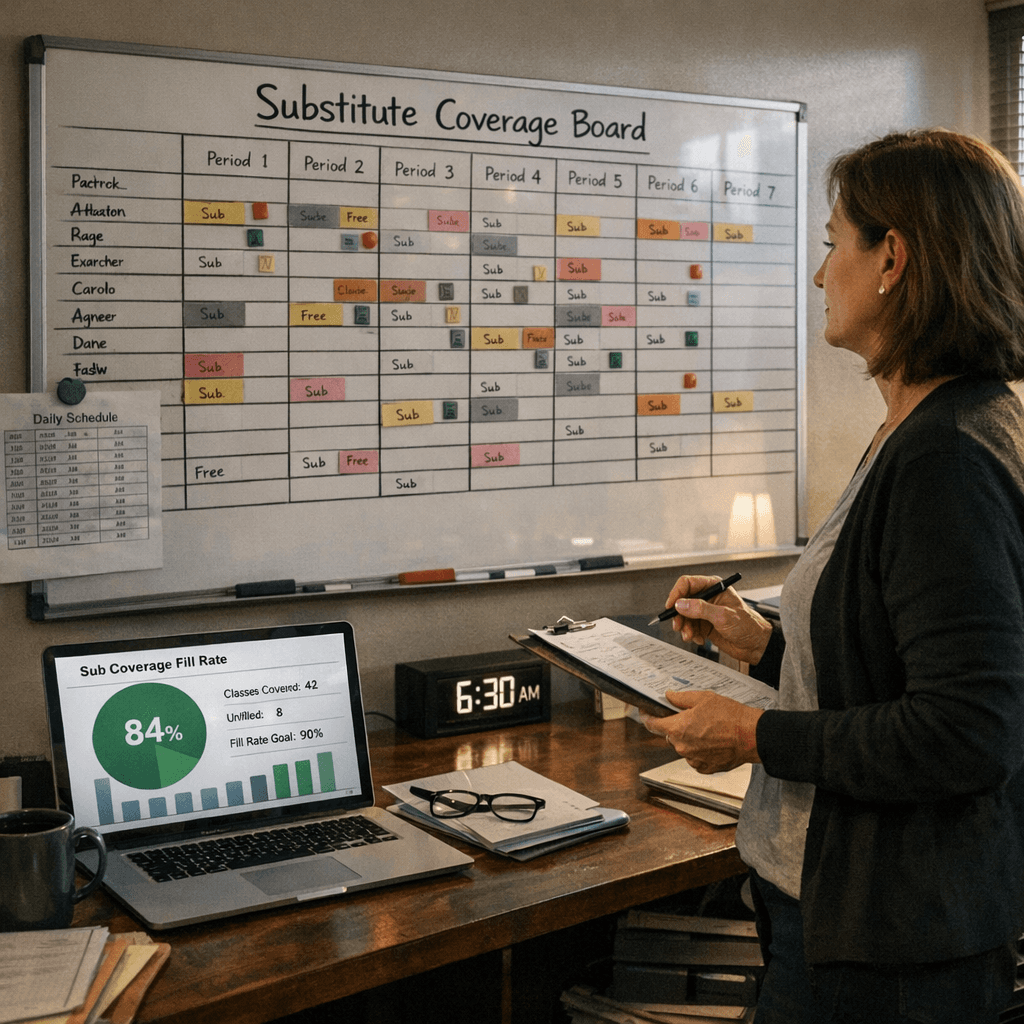
In many private schools, substitute coverage still runs as a morning scramble. Admin teams juggle text messages, call lists, and last-minute schedule edits while classes are about to begin.
That process creates predictable problems:
- lower fill rates for high-friction jobs
- longer time-to-fill when requests are posted late
- inconsistent quality between who gets contacted first and who actually accepts
- avoidable first-bell disruptions when fallback plans activate too late
When this repeats daily, the school loses more than time. It loses instructional consistency and staff trust in operations.
What the workflow looks like
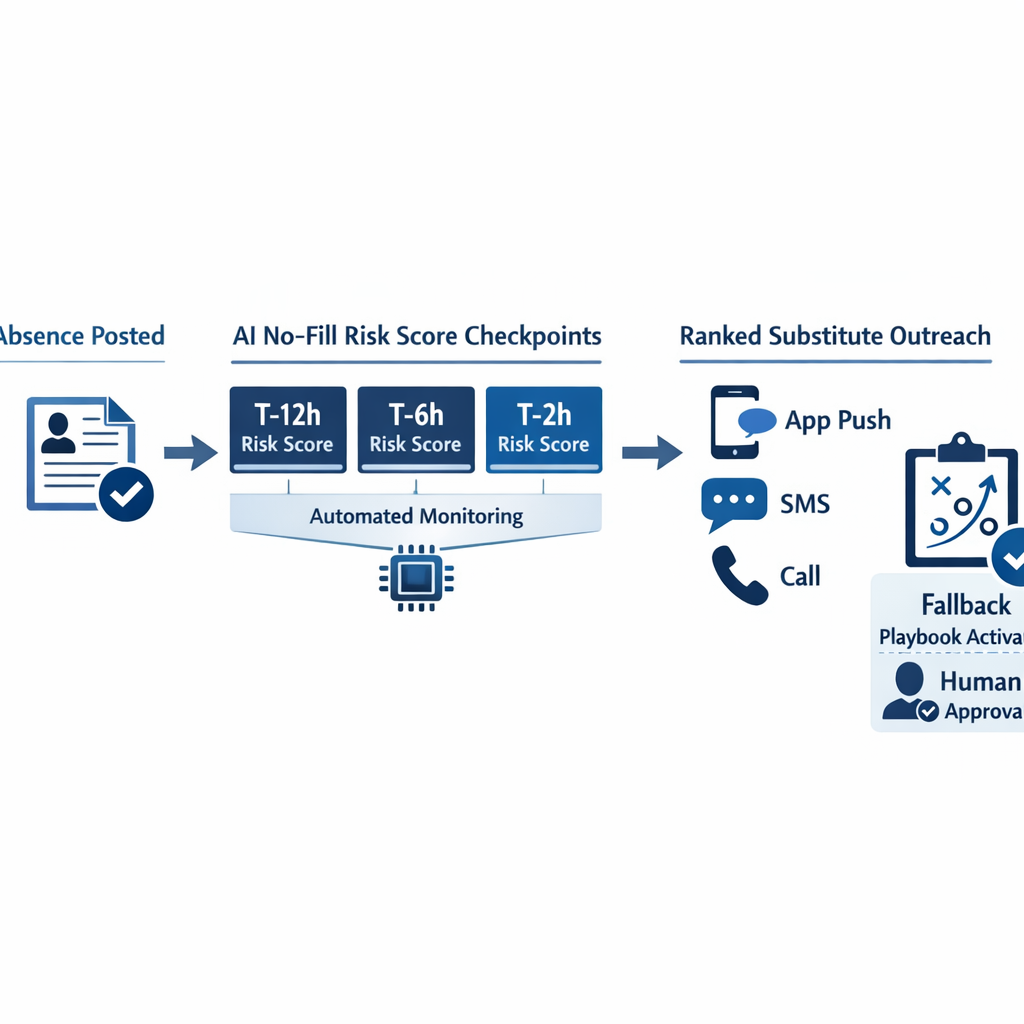
A practical AI-assisted substitute workflow can be implemented in four steps:
- Capture open absences from your existing substitute platform.
- Score each job for no-fill risk at checkpoints (for example T-12h, T-6h, T-2h).
- Rank likely candidates by role fit plus acceptance likelihood and automate staged outreach.
- Trigger predefined recovery playbooks for high-risk jobs approaching first bell.
This model keeps systems of record intact while improving response speed and prioritization.
Use policy thresholds, not intuition
Most failed rollouts come from fuzzy decision rules. Set explicit thresholds for when automation escalates and when human approval is required.
| Decision point | Example threshold | Required action |
|---|---|---|
| High no-fill risk at T-12h | Predicted fill probability <45% | Start prioritized outreach sequence |
| High no-fill risk at T-2h | Job still unfilled + two sequence rounds complete | Notify division lead + trigger fallback prep |
| First-bell critical | Core class unfilled within policy window | Execute approved coverage fallback |
This creates consistency across campuses and reduces decision fatigue for operations staff.
Tools that fit this use case
A typical stack uses existing absence tools with focused AI and communication layers:
- Absence/sub platform (Frontline, Red Rover, similar): source of record for absences, acceptances, and unfilled jobs.
- Rules + orchestration layer (n8n, Make, Zapier, or internal tooling): checkpoint scoring and escalation routing.
- LLM-assisted operations layer: summaries for high-risk jobs, recommended next actions, and exception explanations.
- Messaging layer (SMS/app push/voice): staged outreach with stop rules after acceptance.
- Dashboard layer (Power BI/Looker Studio): fill-rate and rescue visibility by campus, role, and lead-time band.
The goal is operational leverage, not platform replacement.
What a realistic 6-week rollout looks like
Start in one division to reduce complexity and show measurable lift quickly.
Weeks 1-2: Data and baseline setup
- export 12 months of absence and fill history
- normalize key fields (lead time, role, campus, acceptance latency, outcome)
- define policy constraints (certification, max split load, escalation owners)
- record baseline fill rate and time-to-fill
Weeks 3-4: Risk scoring and outreach sequencing
- launch checkpoint risk scoring for open jobs
- activate ranked outreach recommendations and staged channels
- monitor false positives and tune thresholds with operations leads
Weeks 5-6: Recovery playbooks and governance
- enable fallback playbooks for high-risk jobs only
- require human approval for final reassignment decisions
- review intervention logs weekly for fairness, consistency, and policy adherence
Metrics that prove this is working
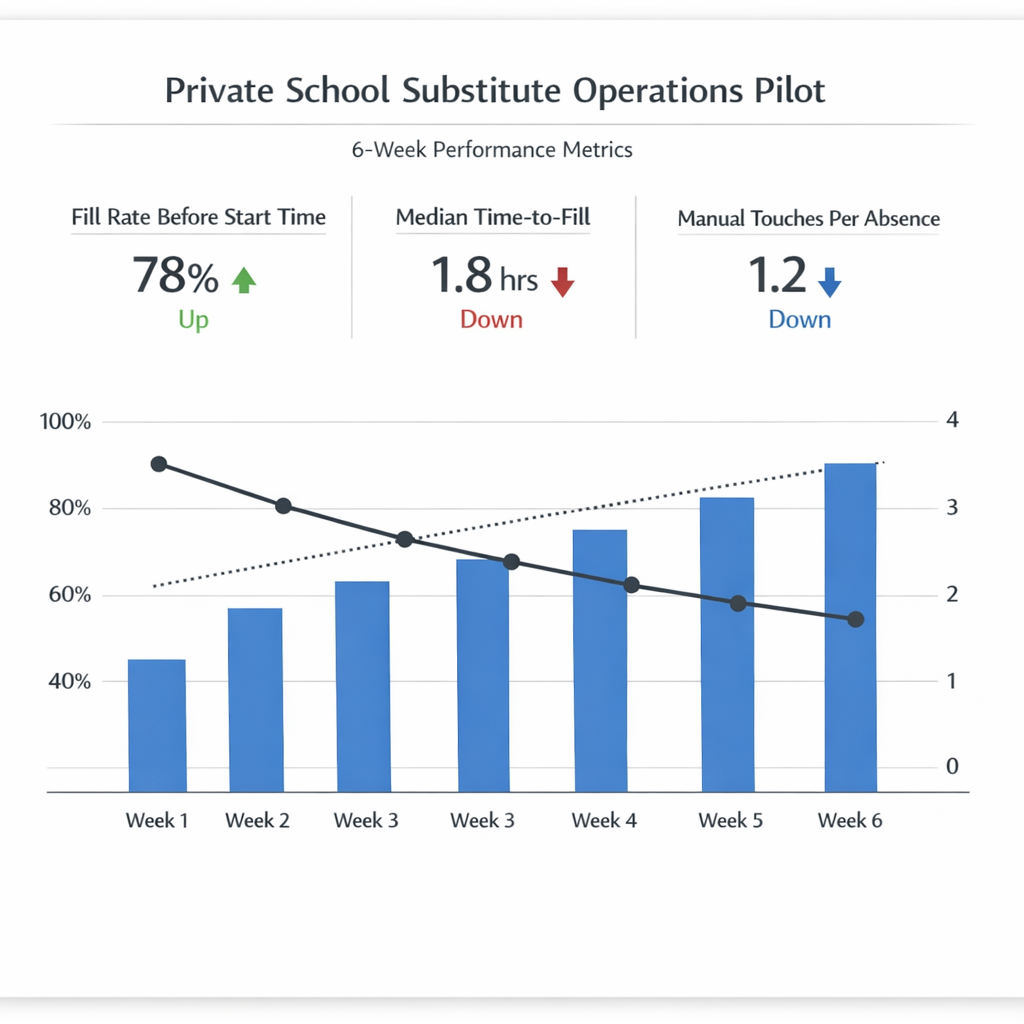
Track a compact set of operational outcomes:
- fill rate before start time
- median time-to-fill from posting to acceptance
- high-risk rescue rate for AI-flagged jobs
- unfilled-at-bell count per week
- manual touches per absence (calls, texts, edits)
- cost per filled absence including exception coverage
These metrics show whether the workflow improved real coverage performance, not just software activity.
Final takeaway
Private schools do not need fully autonomous staffing decisions to improve substitute coverage. They need earlier risk visibility, better outreach sequencing, and consistent recovery playbooks.
If you pilot this with explicit thresholds and clear human control, you can reduce morning chaos, raise fill rates, and protect classroom continuity with less operational strain.