Why this problem matters
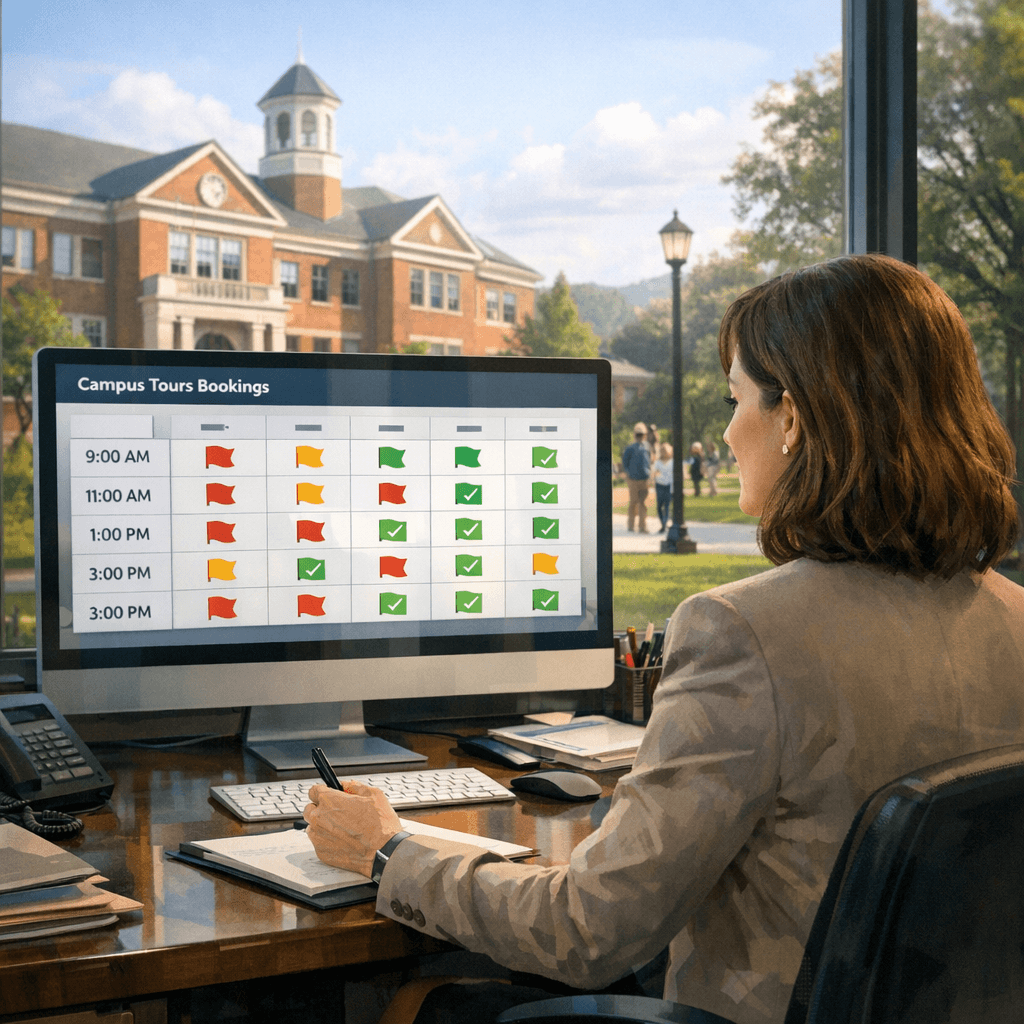
Every missed campus tour is more than an empty calendar slot. It creates hidden operational cost:
- staff time spent on reminder calls and rescheduling threads
- counselor capacity blocked by likely no-shows
- lower conversion from inquiry to application when visits never happen
For small admissions teams, this compounds quickly during peak windows. The goal is not perfect prediction. The goal is fewer avoidable misses and faster recovery when cancellations happen late.
What the workflow looks like
The strongest pattern is a tiered workflow that starts before the event and tightens near tour time.
1) Risk scoring at T-72h, T-24h, and T-2h
Use a practical score based on historical attendance signals:
| Signal | Why it matters |
|---|---|
| Lead time from booking to visit | Very short or very long lead times can raise no-show risk. |
| Prior reschedules | Repeated changes often correlate with lower attendance probability. |
| Message response latency | Slow confirmations can indicate lower intent or schedule conflict. |
| Time slot and weekday | Certain windows produce higher drop-off rates. |
| Distance or travel friction | Longer travel can increase same-day cancellation risk. |
Keep outputs human-readable: low, medium, high risk with reason codes.
2) Adaptive reminder orchestration
Use channel sequencing based on consent and prior behavior:
- Email reminder with calendar details and one-tap confirm link
- Follow-up reminder for medium/high risk bookings
- SMS reminder where policy and consent allow
- Last-mile day-of reminder with fast reschedule option
The key is clarity. Families should always have a low-friction path to confirm or rebook.
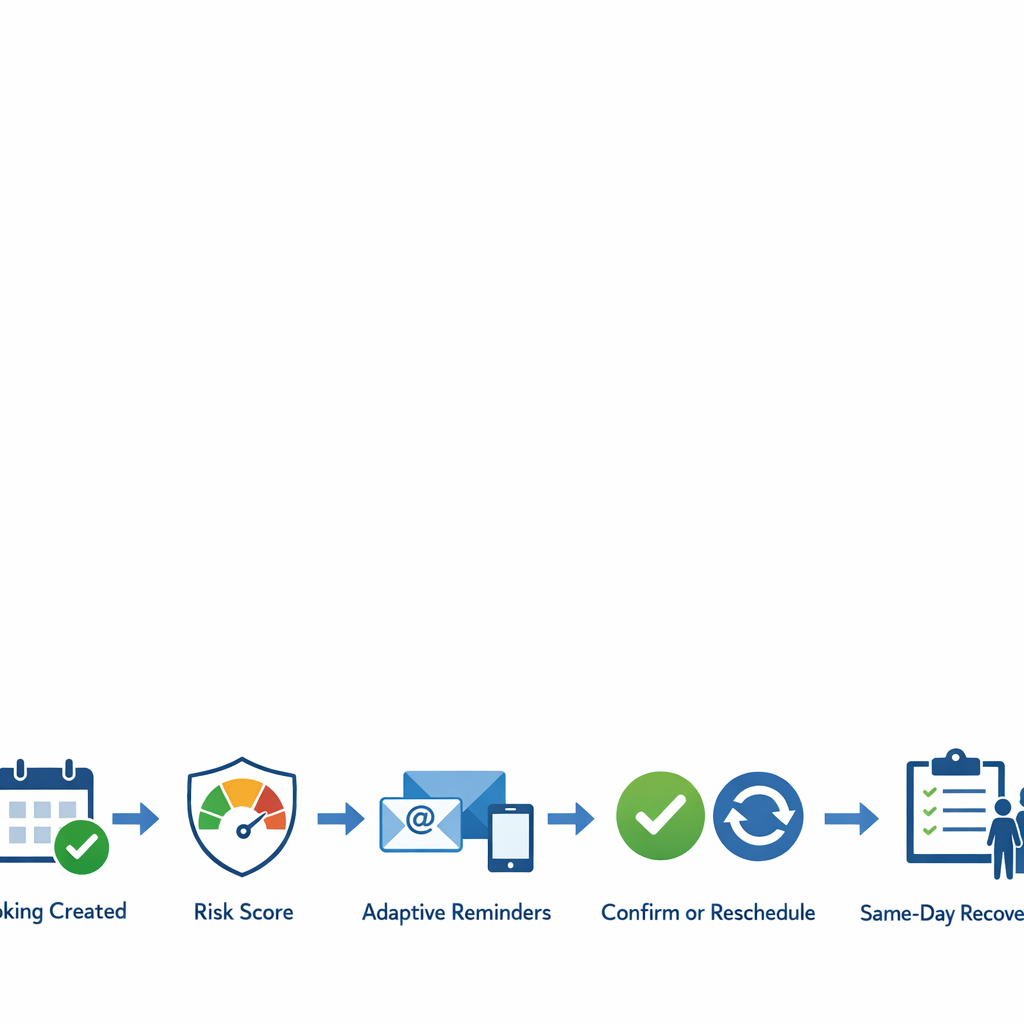
3) Same-day recovery for vacated slots
If a booking cancels late or misses confirmation thresholds:
- alert a prioritized waitlist segment
- offer a virtual-tour fallback when in-person replacement is unlikely
- route callbacks to counselors by conversion potential and urgency
This turns no-show handling from reactive cleanup into a planned operating motion.
Tools that fit this use case
A typical stack for private schools:
- admissions CRM (tour lifecycle events and stage context)
- scheduling system with status updates and webhooks
- consent-aware messaging provider for reminder delivery
- automation layer for risk logic, routing, and recovery triggers
- KPI dashboard for show rate and recovered-slot tracking
You do not need a massive platform rollout. Start with the existing admissions system and add orchestration around clear operational events.
What a realistic rollout looks like
A six-week pilot is usually enough to prove value.
| Week | Focus | Output |
|---|---|---|
| 1 | Baseline data cleanup | Consistent states: showed, no-show, late cancel, rescheduled |
| 2 | Policy + channel rules | FERPA role controls, consent handling, outreach logging |
| 3 | Risk tier launch | Low/medium/high scoring with reason codes |
| 4 | Reminder automation | Adaptive reminders for medium/high risk only |
| 5 | Recovery queue activation | Waitlist fill and fast reschedule flows |
| 6 | Performance review | Show-rate change, slot recovery, staff-time savings |
Track outcomes weekly and keep counselor overrides in place from day one.
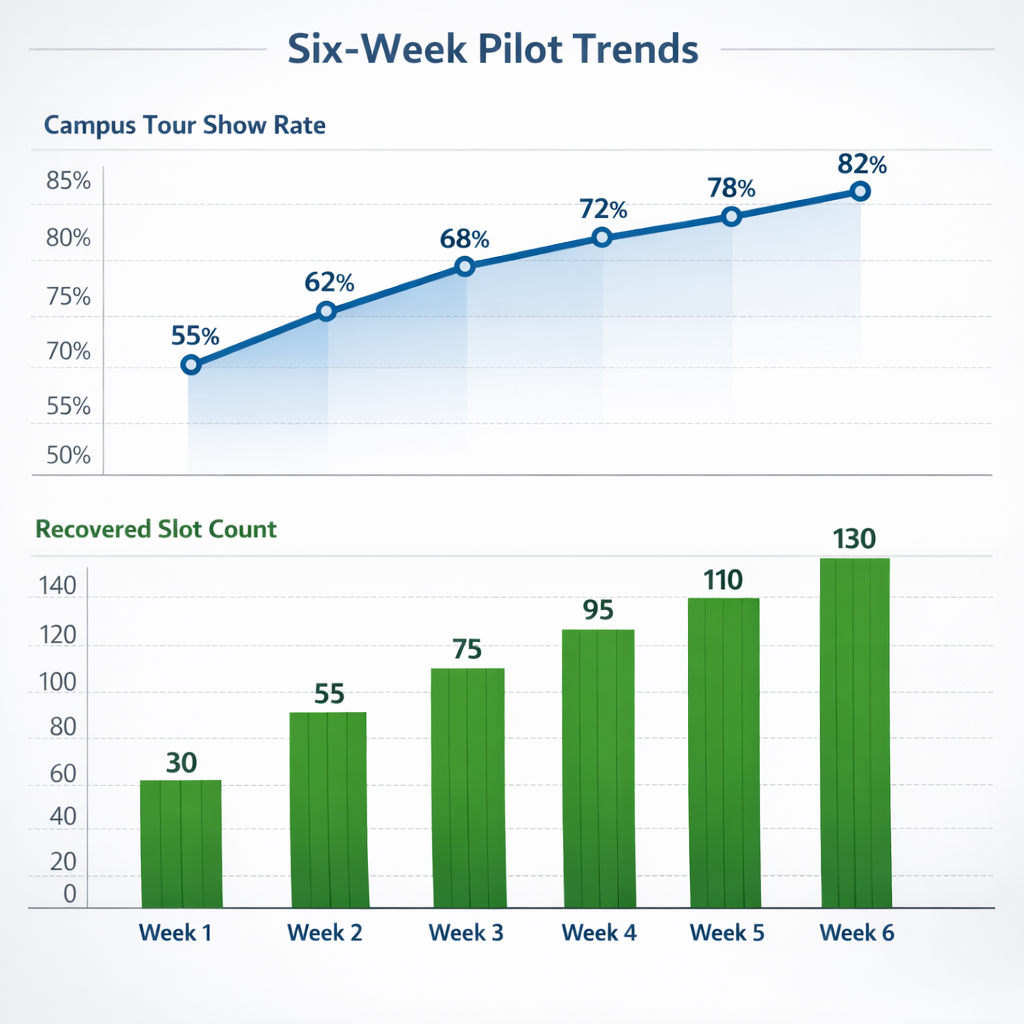
Metrics that prove this is working
Prioritize outcome metrics over activity metrics:
- show rate by segment (new inquiry, repeat inquiry, applicant)
- no-show rate by slot type and weekday
- slot recovery rate within 24 to 48 hours
- median time to reschedule after cancellation
- manual touches per booking
- admissions staff hours saved per week
If show rate improves but staff effort explodes, the workflow is not yet successful. You want better attendance with lower manual load.
Final takeaway
No-show reduction is an operations problem first, not a model-accuracy contest. Private schools get the best results when they combine simple risk tiers, consent-aware reminders, and fast recovery playbooks. That approach protects counselor time, improves family experience, and keeps more high-intent visits on the calendar.